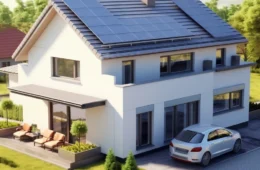
The semi-detached house is one of the most common homes in Ireland, from 1970s estates to new builds on the edge of every town. The good news is that solar panels for semi-detached houses usually work very well. The roof is often a simple pitched shape, the fuse board is easy to reach, and daytime electricity use tends to be steady. There are a few things that are specific to semis, though, mainly the shared roof line and the neighbours next door. This guide walks you through them in plain English.
Are solar panels for semi-detached houses a good idea in Ireland?
For most semi-detached homes, yes. Solar PV does not need wall-to-wall sunshine; it works on daylight, and Irish homes generate useful electricity from spring right through to autumn. What matters most is how much roof you have facing south, east or west, how much shading there is, and how much of the electricity you can use at home.
A semi has one big advantage over a terrace: it usually has a gable or hipped end of its own, so you have more freedom on scaffolding and cable routes. Compared to a detached house, the roof on your half is smaller, so the job is often about making the best use of the space you have rather than fitting as many panels as possible. If you want a broader overview first, our page on solar panels for homes in Ireland covers the basics.
What is different about a semi-detached roof?
You only own half the roof
The roof is split along the party wall. Panels, rails and fixings must stay on your side of that line. A good installer will measure from the party wall on the survey and keep a sensible gap, so nothing overhangs your neighbour’s half and there is room for the ridge and edge details to be finished properly.
Orientation is shared with next door
Most semis have a front and back roof slope. If one faces south, great. If your slopes face east and west, that is still workable: you get morning output on one side and evening output on the other, which can suit a busy household. A proper survey will show how that trade-off works for your roof.
Chimneys, dormers and Velux windows
Many older semis have a chimney stack on or near the party wall, and plenty have had attic conversions with roof windows. These eat into usable space and can cast shade. The installer should map these on the survey and design the panel layout around them, rather than squeezing in extra panels that sit in shadow for half the day.
How many panels will fit?
There is no single answer, because roof sizes vary a lot between estates and builders. The honest way to find out is a roof measurement and a layout drawing. When you look at quotes, check:
- How many panels are proposed and on which slope
- The total system size in kWp (kilowatt peak)
- Whether the layout leaves a clear gap from the party wall, ridge and roof edges
- Any shading from chimneys, trees or nearby buildings, and how the design deals with it
Sizing should be based on your electricity use, not just roof space. Our article on how many solar panels you need shows how to work it out from your bills.
Talking to your neighbours
You do not normally need your neighbour’s permission to put panels on your own half of the roof. But it is good manners, and practical, to let them know before the installer arrives. A quick chat can avoid problems with:
- Scaffolding: it may need to sit near their boundary or driveway for a day or two.
- Access: if the only way to reach part of your roof is over their side, you need their agreement first.
- Parking: the installer’s van and deliveries can block a shared driveway.
- Future plans: if they are thinking about solar too, sharing scaffolding on the same week can make things easier for both of you.
If you live in a managed estate, check whether there are any rules on external changes. If you rent, you need the landlord’s agreement.
Planning permission for semi-detached homes
Rooftop solar on most houses in Ireland is exempt from planning permission, as long as the panels meet certain conditions, such as keeping a set distance from the edge of the roof. Different rules can apply to protected structures and in some designated areas. Read our guide to solar panels and planning permission before you sign anything, and ask your installer to confirm the layout meets the exemption conditions.
SEAI grant and the grid connection
Semi-detached homes qualify for the SEAI Solar Electricity Grant on the same basis as any other house. According to the SEAI Solar Electricity Grant page, the grant is €700 per kWp up to 2kWp, plus €200 per additional kWp up to 4kWp, with a maximum of €1,800. The key rules are:
- Your home must meet SEAI’s build-and-occupancy date rule (check the SEAI page for the current cut-off, as it was extended in late 2026)
- You must get grant approval before any work starts
- The work must be done by an SEAI-registered company
- A post-works BER is needed before the grant is paid
A battery grant was also announced in Budget 2027. Check the SEAI site for the current amount and conditions. You can search the SEAI list of registered solar PV companies by county.
On the electrical side, most homes are single-phase. Under the ESB Networks micro-generation rules, single-phase systems up to 25A (about 6kVA) use the NC6 “inform and fit” route. Your installer normally handles the paperwork.
Battery, diverter or both?
Semis often have limited space in the hall or utility, so think about where a battery or inverter would go before you decide. Common spots are the attic, a garage, an outside wall with a suitable enclosure, or under the stairs, depending on the product and the installer’s advice. A hot water diverter is a smaller add-on that sends surplus solar to your immersion. If you are weighing up storage, our solar battery storage advice page is a good next step.
Checklist before you get quotes
- Gather 12 months of electricity bills or smart meter data
- Note which way each roof slope faces and any shading
- Tell your neighbour roughly when work might happen
- Decide if you want a battery now or a battery-ready inverter
- Get at least two or three quotes from SEAI-registered companies and compare them line by line
Our compare solar quotes page explains what to look for on each quote.
FAQs
Do I need my neighbour’s permission to put solar panels on my semi?
Not usually for panels on your own half of the roof. You do need their agreement if scaffolding or access has to go onto their property, so talk to them early.
Can panels go right up to the party wall?
No. They must stay on your side, and a gap is normally left from the party wall and roof edges. Your installer’s layout drawing should show this clearly.
Is an east-west semi worth doing?
Often, yes. Output is spread across the morning and evening, which can match when many families use the most electricity. A proper survey will tell you what to expect for your roof.
Will solar panels affect my neighbour’s roof?
A correctly installed system is fixed to your own rafters and does not touch their side. Ask the installer how they will protect the ridge and party wall line during the work.
Get your solar quote today
Want to know what will fit on your half of the roof? Get your solar quote today and we will put you in touch with SEAI-registered installers who can survey your semi-detached home and give you a clear, honest layout and price.