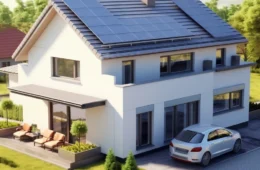
Solar panels for old houses and bungalows in Ireland usually work well. Older homes and bungalows often have generous roof space, and they’re squarely within the SEAI grant rules. The challenges are about the building rather than the panels: the age and condition of the roof, whether it’s natural slate, concrete tile or fibre-cement, whether the house is a protected structure, and making sure the home is ready for the extra load. This guide covers each one. Checked 26 October 2026.
Grant eligibility: the pre-2025 rule
Older homes have always qualified for SEAI’s solar grant; newer ones are now catching up. From 6 October 2026 the grant is open to homes built and occupied before 2025, extended from the previous pre-2021 rule (pv magazine, 30 September 2026, SEAI application guide V6.0). SEAI’s Code of Practice asks for the property’s year of construction with reference to the BER certificate (SEAI Code of Practice), so have your BER to hand.
| Grant element | Amount |
|---|---|
| Panels: first 2kWp | €700 per kWp (€1,400 for 2kWp) |
| Panels: 2–4kWp | €200 per extra kWp (panels capped at €1,800) |
| Battery of 5kWh or more | €600 flat |
| Maximum | €2,400 |
| Higher grant (qualifying welfare payments) | Up to €9,000 for panels and battery |
If you receive Fuel Allowance or another qualifying payment, see free solar panels in Ireland for the higher grant. Supply and installation on a private home is zero-rated for VAT (Revenue). Full grant details are on our solar grants page.
Solar panels for old houses and bungalows: check the roof first
Panels are designed to last 25 years or more, so the roof underneath needs to as well. SEAI’s Code of Practice requires the installer to check that the roof structure can withstand the loads from the system, with a site inspection by a competent person and a structural engineer consulted where there’s doubt (SEAI). The UK’s National Federation of Roofing Contractors puts the principle plainly: if the roof doesn’t have enough remaining life for a 20–30-year solar system, it should be replaced before the panels go on (NFRC, March 2026).
Signs to discuss with your installer or a roofer before you sign:
- Slipped, cracked or missing slates or tiles
- Sagging ridge lines or rafters
- Damp or daylight visible in the attic
- Moss build-up, worn flashings around chimneys, or a valley that has leaked before
- Any plan to re-roof, add a dormer or replace a chimney in the next 10–15 years
Removing and refitting panels for later roof work costs money, so fixing the roof first is usually cheaper overall.
Slate vs tile vs fibre-cement roofs
Natural slate
Natural slate is brittle, so fixing brackets needs care. SEAI’s Code of Practice allows tiles and slates to be cut or notched as long as the roof stays weathertight, requires a waterproof system where cables pass through the roof, and specifies stainless steel, aluminium or galvanised steel mounting brackets (SEAI). Ask the installer exactly how they’ll fix to your slates and how they’ll keep each fixing watertight.
Concrete tile
On concrete tiles, brackets usually hook under the tiles and fix to the rafters, and the same weathertightness rules apply. Check that the installer will replace any tiles broken during installation.
Fibre-cement slates or sheets: think asbestos
Some older roofs and outbuildings have fibre-cement slates or corrugated sheets, which may contain asbestos. The Health and Safety Authority says asbestos-containing materials can be hidden in any building built or refurbished before 2000, lists roof sheets, slates and tiles as common locations, and says these materials must be identified before maintenance or refurbishment work starts (HSA). If you don’t know what your roof is made of, the HSA advises presuming it may contain asbestos until proven otherwise. Don’t let anyone drill it without a survey.
Flat-roof extensions
If your house has a flat-roofed extension, panels can go there on frames, with different planning limits; see solar panels on a flat roof in Ireland.
Planning: houses, protected structures and conservation areas
For an ordinary house, rooftop solar is exempt from planning permission under Class 2(c) of S.I. No. 493 of 2022, with no limit on panel area (Department of Housing). Panels must be at least 50cm from the edge of the roof and no more than 15cm above a pitched roof (50cm on a flat roof). Wall-mounted panels aren’t exempt, and in an Architectural Conservation Area the works must not materially affect the character of the area (S.I. 493 of 2022).
Protected structures
If your house is on your council’s Record of Protected Structures, planning exemptions only apply where the works would not materially affect the character of the structure (Department of Housing). You can ask the council for a Section 57 declaration on whether specific works need permission. For example, Offaly County Council issued a declaration in 2023 that panels on the roof of a protected structure’s outbuilding would not materially affect its character, on conditions including that they be reversible and not involve removing historic roofing (Offaly County Council). Each case is decided on its own facts.
Bungalow-specific points
- Roof space: a bungalow’s roof covers its whole floor area, so there may be room on one slope, or the system can be split across east and west faces.
- Access: single-storey eaves can make access simpler, but installers must still use safe access equipment.
- Hipped roofs: smaller, triangular slopes can limit panel layout. Ask for a layout drawing.
- Electrics: older consumer units may need upgrading to accommodate the solar circuit. Ask whether this is included in the quote.
Insulate first?
SEAI’s homeowner guide advises making sure your home has a good energy performance before installing solar (SEAI). In an older, draughty house, insulation and airtightness often cut bills more per euro than panels. Solar still works on a poorly insulated home, but it’s worth asking a BER assessor which upgrade to do first. Our solar panels for homes guide covers system sizing.
FAQs
Can I get solar panels on an old house in Ireland?
Yes. Older homes qualify for SEAI’s grant, provided the roof is in good enough condition and structurally able to take the load, which the installer must check.
Is my house too new for the solar grant?
From 6 October 2026, homes built and occupied before 2025 qualify. Homes built in 2025 or later are not currently eligible for the standard grant.
Can solar panels go on a slate roof?
Yes. SEAI’s Code of Practice allows slates to be cut or notched as long as the roof stays weathertight. Ask your installer how each fixing will be sealed.
Do I need planning permission for solar on a protected structure?
Possibly. Exemptions only apply if the works don’t materially affect the character of the structure. Ask your council for a Section 57 declaration.
Should I replace my roof before installing solar?
If the roof is near the end of its life, usually yes. Removing and refitting panels later adds cost, and the NFRC advises replacing roofs without enough remaining life first.
Get your solar quote today
Get your solar quote today. Tell us about your house and roof, and we’ll connect you with SEAI-registered installers who’ll survey it properly before quoting. Or call 089 450 4544.